



Disclaimer: All information contained herein should be independently verified by the reader and not be relied upon without such verification. An automated external defibrillator is a medical device and should only be used according to the manufacturer’s instructions. Sudden cardiac arrest is a medical occurrence, and appropriate medical advice should be sought. Always dial Triple Zero in an emergency.
At a glance
- An untrained person can use an AED as the device is built specifically for bystanders with no medical background.
- The AED analyses the heart rhythm automatically and decides whether a shock is needed, so the responder does not have to make that call.
- Voice prompts guide the user through every step from turning the device on to continuing CPR.
- Visual cues and pad placement diagrams on the device mean nothing needs to be memorised.
- Fully automatic AEDs deliver the shock without requiring the responder to press any button.
Someone nearby collapses. You spot an automated external defibrillator (AED) on the wall. You have never used one before, and in that moment, the question hits: Is this something I can actually do?
The answer is, yes. An untrained person can use an AED in an emergency. That is not a reassurance; it is how these devices are designed. AEDs are built specifically for bystanders with no medical background. The device handles the clinical decisions. The user follows the prompts.
That distinction matters because for every minute without defibrillation, the chance of survival reduces by up to 10%. [1]
Knowing that an AED can be used without training means a bystander does not need to wait for someone more qualified to arrive. The right response is to call Triple Zero immediately, begin CPR and use an AED as soon as one is available. This article explains how the device makes that possible for anyone.
AEDs Were Designed for Untrained Bystanders
An automated defibrillator is not only for paramedics, doctors or people with advanced first-aid knowledge. AEDs are designed to support ordinary bystanders who may be under pressure and unsure what to do. An ambulance cannot always arrive within the first critical minutes of a sudden cardiac arrest, which is why AEDs are built to guide nearby people to act immediately while professional help is on the way.
For an untrained person, the role is simple: turn the device on, follow the prompts and keep responding until emergency services take over. The AED guides the user, analyses the heart rhythm and determines whether a shock is needed, so the responder is not expected to make any medical decisions.
The Device Makes the Clinical Decision, Not the User
One of the biggest concerns for an untrained person is making the wrong decision. With an AED, the bystander does not need to interpret the heart rhythm or decide whether a shock is needed.
Once the pads are applied, the AED automatically analyses the heart’s electrical rhythm. If a shockable rhythm is detected, the device will either deliver the shock automatically or prompt the responder to press a button that delivers the shock, depending on the type of AED used. If no shockable rhythm is detected, no shock will be delivered.
This is why AEDs can be used by people without medical training. The device makes the shock decision and tells the responder what to do next.
Voice Prompts Guide Every Step
From the moment it is turned on, an AED gives spoken instructions. These prompts guide the responder through each stage, even if they have never used a defibrillator before.
The device may tell the user when and where to apply the pads, when to stay clear from the person, when a shock is being prepared and when to continue CPR. Each instruction follows the last, so the responder is not left guessing.
In a stressful emergency, clear voice prompts make the process more manageable for someone willing to help but unsure where to begin.
Visual Cues Remove the Guesswork
Most AEDs also include visual guidance to support the spoken instructions. The screen displays diagrams, icons and indicator lights that show exactly where electrode pads should be placed and what is happening at each stage.
This means the responder is not expected to know the steps beforehand. The information is shown on the device, helping the user follow the process in real time.
Together, voice prompts and visual cues make using an AED more approachable for people with no prior experience.
Fully Automatic Operation Can Reduce Hesitation
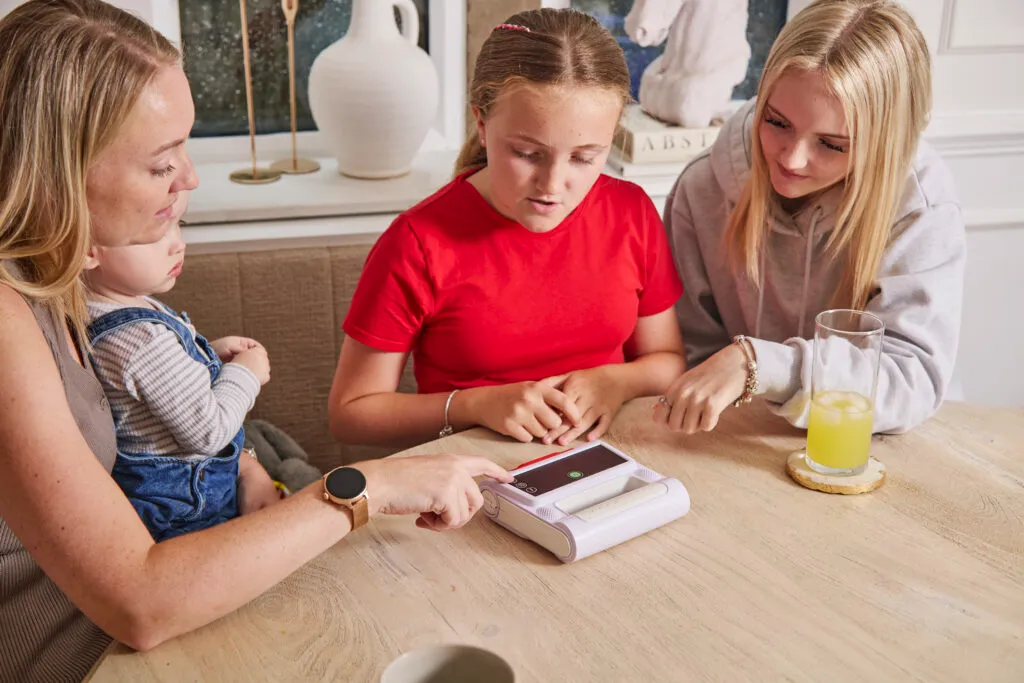
AEDs can work in different ways. A semi-automatic AED analyses the heart rhythm and, if a shock is advised, instructs the responder to press a shock button. A fully automatic AED, such as the Elliot defibrillator, skips that step. Once it detects a shockable rhythm, it warns everyone to stand clear and delivers the shock itself, with no button press needed.
For an untrained bystander, this can reduce the stress of having to deliver the shock themselves. The shock decision remains with the device. The responder simply follows the safety prompts and makes sure no one is touching the person while the shock is being delivered.
The Device Keeps Guiding After the Shock
AED guidance does not stop once a shock is delivered or ruled out. The device may prompt the responder to continue CPR, then re-analyse the heart rhythm after a set period and advise whether another shock is needed.
This means the user is not left to decide what happens next on their own. The AED continues to guide the response step by step until emergency services arrive or take over care.
What Does Using an AED Actually Look Like?
Here’s what the process actually looks like, step by step, once you’ve called Triple Zero and started CPR. The AED’s role from there is to guide you through the next steps:
- Turn It On: Most modern AEDs activate with a simple action, such as opening the case, pressing a power button or pulling an activation handle. From that moment, the device begins giving voice and visual instructions. For an untrained responder, this is the most important step: turn the device on and listen carefully to what it says next.
- Place the Pads as Directed: The AED will instruct the responder to place the pads on the person’s bare chest. Placement diagrams are usually shown on the pads, the device or the display. The responder follows what they see and hear.
- Let the Device Analyse: Once the pads are in place, the AED tells everyone to stand clear and automatically analyses the heart rhythm. The responder does not need to interpret anything during this stage. The device checks whether a shock is appropriate.
- Follow Shock or No-Shock Instructions: If a shockable rhythm is detected, the AED will either deliver the shock automatically or instruct the responder to press a button, depending on the device type. If no shockable rhythm is detected, no shock is delivered.
- Continue CPR When Prompted: After a shock is delivered or ruled out, the AED will instruct the responder to begin or resume CPR. The device may re-analyse the heart rhythm and continue giving prompts until emergency services arrive.
For a more detailed walkthrough, read our step-by-step guide to using an AED.
The biggest barrier for many bystanders is not the AED itself. It is the fear of doing the wrong thing. AEDs are designed to reduce that fear by guiding the responder through each stage, analysing the heart rhythm and making the shock decision itself.
Training can build confidence and familiarity, but in a cardiac arrest emergency, a person should not wait for someone more experienced if an AED is available. Using the AED promptly can increase the person’s chance of survival.
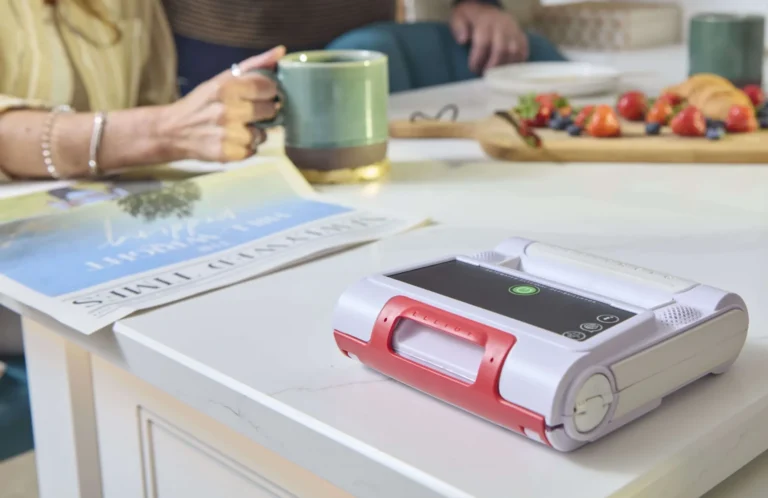
For those considering AED access at home, at work or in community settings, Elliot AED is designed to make cardiac emergency response more approachable. It is a portable, fully automatic AED built for everyday users, with a red activation handle that starts the process, clear voice prompts that guide each step and a visual prompt panel that supports the responder in real time.
FAQs
Should you have a defibrillator at home?
Having a defibrillator at home may be worth considering if you want faster AED access during a sudden cardiac arrest emergency, especially if someone at home has known heart risk factors, an older family member lives there or emergency help may take time. Around 76% of out-of-hospital cardiac arrests in Australia and New Zealand occur in private residences, yet only around 2% of these cases receive public defibrillation before EMS arrival. [2] Public AEDs may not be close enough when every minute matters.
Should you perform CPR or use a defibrillator first in an emergency?
Call Triple Zero first, then start CPR immediately. If an AED is nearby, turn it on and follow the prompts as soon as it is available. CPR helps keep blood moving while the AED is being prepared, and the AED checks the heart rhythm to determine whether a shock is needed. If other people are nearby, one person can call Triple Zero while another starts CPR or retrieves the AED.
Does an AED replace CPR?
No. An AED does not replace CPR. CPR and AED work together during a cardiac arrest emergency. CPR helps keep blood moving to the brain and vital organs, while the AED analyses the heart rhythm and delivers or advises a shock only if needed. After a shock is delivered or ruled out, the AED may prompt the responder to continue CPR until emergency services arrive.
Citation
- ScienceDirect – Decreasing the time of defibrillation (research paper) https://www.sciencedirect.com/science/article/abs/pii/S0196064404009400
- ScienceDirect – The epidemiology of out-of-hospital cardiac arrest in Australia and New Zealand (AUS-ROC report) https://www.sciencedirect.com/science/article/abs/pii/S0300957222000120