



Disclaimer: All information contained herein should be independently verified by the reader and not be relied upon without such verification. An automated external defibrillator is a medical device and should only be used according to the manufacturer’s instructions. Sudden cardiac arrest is a medical occurrence, and appropriate medical advice should be sought. Always dial Triple Zero in an emergency.
At a glance
- Use an AED when sudden cardiac arrest is suspected, meaning the person is unresponsive and not breathing normally.
- Call Triple Zero (000), start CPR and bring the AED to the person as quickly as possible.
- If another responder is available, continue CPR while they turn on the AED and prepare the pads; if you’re alone, pause briefly to set up the device yourself.
- Follow the AED prompts for pad placement, rhythm analysis, standing clear and resuming CPR.
- The AED will only advise or deliver a shock if it detects a shockable rhythm.
When sudden cardiac arrest happens, the first response often comes from whoever is already nearby. In many cases, that person hesitates because they are unsure what the automated external defibrillator (AED) will do once it is turned on.
Will it shock straight away? Can it shock someone who does not need it? What if the pads are placed incorrectly? Does the responder have to decide whether to shock? What happens next?
These questions lead to hesitation, which costs valuable time during cardiac arrest. But the AED is designed to reduce that uncertainty by analysing the heart rhythm, providing step-by-step prompts and advising or delivering a shock only when a shockable rhythm is detected.
This article explains how to use an automated external defibrillator in an emergency, including what to do before opening the device, how pad placement and rhythm analysis work and why CPR continues until emergency services arrive.
Before You Turn On the AED: Call Triple Zero and Start CPR
If someone is unresponsive and not breathing normally, treat it as suspected sudden cardiac arrest. Call Triple Zero (000) and start CPR. CPR helps keep blood moving to the brain and vital organs while an AED is being retrieved.
If others are nearby, split the tasks: one person calls Triple Zero, one starts CPR and another brings the AED. If you are alone, call Triple Zero first, follow the operator’s instructions and use the AED as soon as it is available.
CPR and defibrillation are not alternatives. Keep CPR going until the AED is ready to analyse the rhythm, then follow the device prompts.
The AED does not perform CPR or replace emergency services. It is one part of the sudden cardiac arrest response, not the whole response.
Step by Step: How to Use an Automated External Defibrillator
Once an AED is available, turn it on immediately and follow the instructions as given.
Step 1: Power on the Device
How the AED is activated depends on the model. Some AEDs power on when the lid is opened, while others require a button press or pull handle.
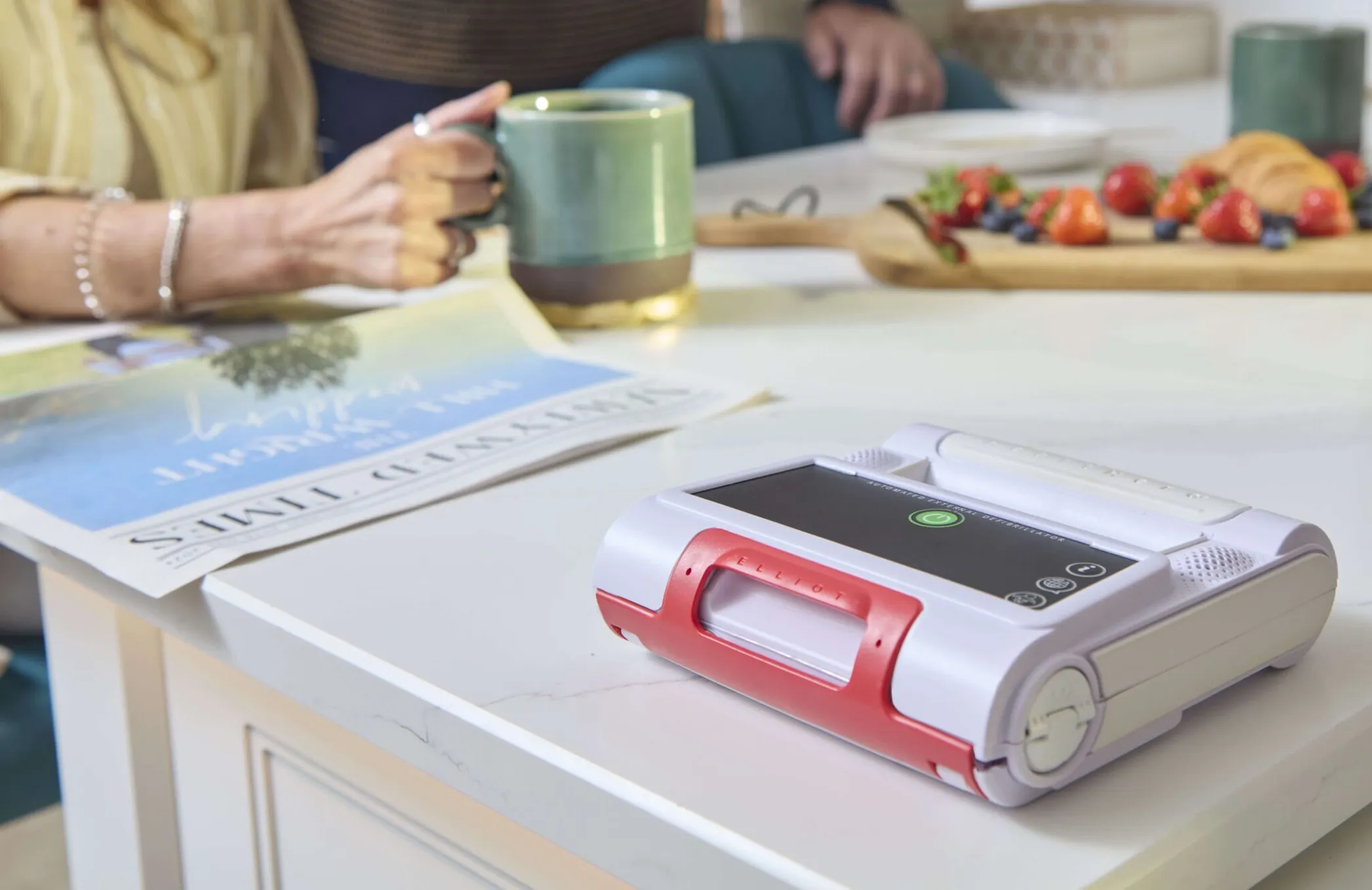
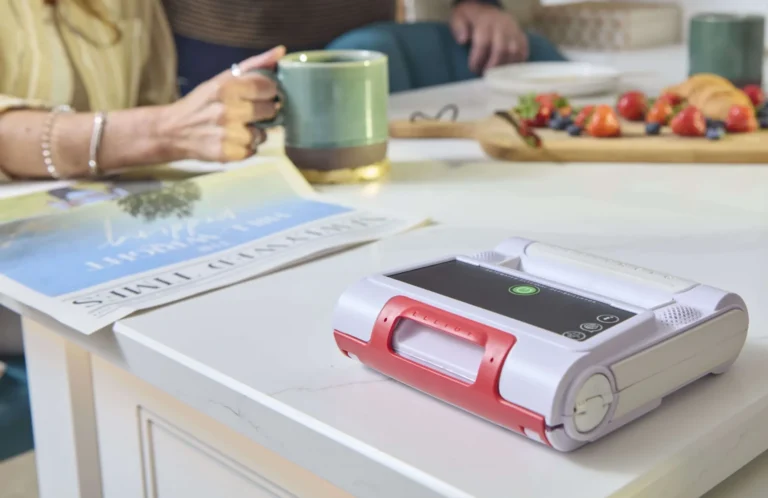
Elliot AED can be powered on by pressing the power button or pulling the red activation handle. Pulling the handle also provides access to the pads, helping the responder move straight into the next step.
Once the AED is on, the voice prompts begin. The responder does not need to navigate a menu or diagnose the heart rhythm.
Step 2: Follow the Voice and Visual Prompts
The AED prompts guide the responder through the rescue one step at a time. They indicate when and where to place the pads, when to stand clear and when to continue CPR.
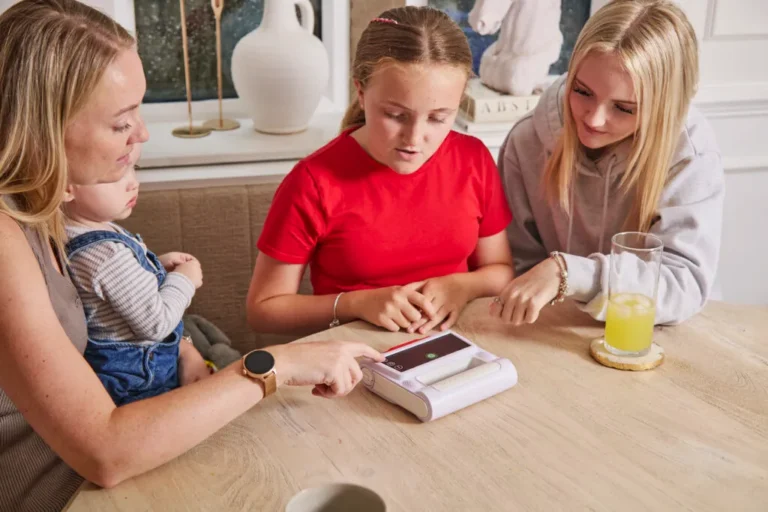
Voice guidance is the primary instructional channel, but many AEDs also use lights, icons or diagrams to support each step. On Elliot, the visual prompt panel works alongside the voice instructions, which can be useful in loud, crowded or stressful environments.
Step 3: Expose the Chest and Place the Pads
The AED will instruct the responder to place the electrode pads on the person’s bare chest because direct skin contact is needed to read the heart’s electrical activity.
If a second responder is available, they can turn on the AED and prepare the pads while you continue compressions. If you’re on your own, pause CPR just long enough to retrieve the AED, turn it on and attach the pads, then resume compressions until the device is ready to analyse.
For children, select the AED’s child or paediatric mode before placing the pads. With Elliot AED, this is built into the device. For adults, no mode selection is needed.
The visual instructions show where each pad should go. For an adult, place one pad on the upper right side of the chest, below the collarbone. The other goes on the lower left side of the chest.
If clothing, moisture or poor contact affects placement, the AED may prompt the responder to check or adjust the pads.
Elliot’s pads are pre-connected and peel-and-stick, so the responder does not need to connect separate wires during the emergency.
Step 4: Stand Clear While the AED Analyses the Rhythm
Once the pads are attached, the AED will tell everyone to stand clear. Chest compressions should stop at this point, and no one should touch or move the person while the device analyses the heart rhythm.
During this step, the AED checks whether a shockable rhythm is present. Movement can interfere with the reading, so the responder should wait for the next instruction.
Step 5: The AED Determines Whether a Shock Is Needed
After analysing the rhythm, the AED will either prepare for a shock or advise that no shock is needed.
“No shock advised” does not mean the person is fine or that the emergency is over. It means the AED has not detected a rhythm that can be treated with a shock at that moment.
The AED should stay attached, and CPR should continue when prompted. The device may reanalyse the rhythm after each CPR cycle until emergency services arrive.
Step 6: Shock Delivery: Fully Automatic vs Semi-Automatic
If a shock is needed, the AED will warn everyone to stand clear. No one should be touching the person when the shock is delivered.
A semi-automatic AED charges and tells the responder to press the shock button. A fully automatic AED, such as Elliot, delivers the shock after confirming a shockable rhythm without the responder having to press a shock button.
The shock is designed to interrupt chaotic electrical activity and give the heart a chance to return to a more organised rhythm.
Step 7: Resume CPR and Keep Following Prompts
After a shock is delivered, the AED will prompt the responder to resume CPR. If no shock is advised, CPR should continue when the device instructs.
The AED remains attached and may advise or deliver another shock after further rhythm checks.
Elliot provides CPR prompts and a metronome to help support compression rhythm, but it does not perform CPR. The responder should keep following the AED and Triple Zero operator instructions until emergency services arrive.
Using an AED can feel intimidating before you understand how it works. Once the device is turned on, the process is guided: listen to the prompts, place the pads, stand clear when instructed and continue CPR when told.
The priority is simple: call Triple Zero, start CPR, use the AED as soon as it is available and keep going until emergency services arrive.
Knowing the steps only helps if a defibrillator is within reach. A portable defibrillator, such as Elliot AED, can help keep guided defibrillation closer to where cardiac arrests may occur, with voice prompts, visual guidance, fully automatic operation and readiness monitoring that support use under pressure.
FAQs
Can an untrained, non-medical person use an AED?
Yes. AEDs are designed to be used by untrained, non-medical people when sudden cardiac arrest is suspected. The device gives step-by-step voice and visual prompts, including where to place the pads, when to stand clear and when to continue CPR.
How many shocks can an AED deliver?
Shock capacity depends on the model, battery condition, temperature and how long the device is used during the emergency. For Elliot, the device is designed to deliver up to 120 shocks, with adult shocks at 150 joules and child shocks at 50 joules. During a rescue, it will reanalyse the heart rhythm in between CPR and advise or deliver further shocks only if a shockable rhythm is detected.
Can anyone buy a defibrillator?
Yes. AEDs can be purchased for homes, workplaces, sports clubs, schools, community facilities and public spaces. Once purchased, the owner’s main responsibility is to keep the device accessible, maintained and ready to use, with pads and batteries replaced according to the manufacturer’s instructions. Elliot is available to order online for people and organisations who want to keep a portable AED close by in an emergency.