



Disclaimer: All information contained herein should be independently verified by the reader and not be relied upon without such verification. An automated external defibrillator is a medical device and should only be used according to the manufacturer’s instructions. Sudden cardiac arrest is a medical occurrence, and appropriate medical advice should be sought. Always dial Triple Zero in an emergency.
At a glance
- Sudden cardiac arrest can happen to anyone without warning, including to people with no known heart condition.
- Public AEDs may be difficult to access on remote trails, at campsites or on unsealed roads.
- Every minute without defibrillation can reduce survival, so carrying a portable defibrillator keeps help within reach.
- An automated external defibrillator guides the responder through rhythm analysis, shock delivery and when to resume CPR.
Australians who go hiking and camping usually plan for cuts, sprains, changing weather, navigation challenges and limited mobile reception. Cardiac emergencies, however, are often left out of the checklist.
On a remote trail or at an isolated campsite, the nearest public AED (automated external defibrillator) or medical team may be a considerable distance away. That distance can leave you relying on the equipment you have carried.
A portable defibrillator is a practical addition to the emergency plan for remote, multi-day and group trips, alongside first aid supplies, CPR knowledge and a reliable way to request help.
Carrying an AED does not remove every risk, but it gives hikers and campers access to guided defibrillation in remote areas where fixed emergency equipment may not be available.
Sudden Cardiac Arrest Can Happen Without Warning
Sudden cardiac arrest is not reserved for people with a diagnosed heart condition. It can affect anyone at any time, even someone who appears fit and healthy, during physical activity or while resting at camp. When it occurs, the person usually becomes unresponsive and stops breathing normally because the heart is no longer pumping blood effectively.
Around 32,000 out-of-hospital cardiac arrests occur in Australia each year, and only about one in ten people survive. However, when CPR and AED are used within the first three to five minutes, survival rates can increase to 60-70%. [1]
These figures highlight the importance of having emergency equipment close by, particularly in outdoor locations where public AED access may be limited. Carrying a portable defibrillator gives the group a way to analyse the heart rhythm and deliver a shock if required while CPR continues and emergency assistance is arranged.
Public AEDs May Not Be Accessible on Trails or at Campsites
Public AEDs are commonly installed in shopping centres, workplaces, sporting facilities and community buildings. They are far less likely to be available along bushwalking tracks, at remote campsites or on unsealed touring routes. Even when one is located nearby, reaching it and returning to the person can delay defibrillation.
That delay can significantly affect the response. For every minute without defibrillation, the person’s chance of survival may decrease by around 10%. [2] Carrying a portable defibrillator allows the group to analyse the heart rhythm and deliver a shock, if required, in the event of cardiac arrest. This is particularly relevant on overnight walks, remote camping trips and organised outdoor activities where you may be kilometres from staffed facilities.
Emergency Services May Take Longer to Reach Remote Locations
Distance, rough terrain, weather, road access and poor mobile reception all affect how quickly paramedics or rescue teams can reach a hiking trail or campsite. Even after Triple Zero has been contacted, the group may need to manage the emergency for an extended period.
Carrying an automated external defibrillator allows defibrillation to begin while professional help is on the way, rather than waiting for emergency services to arrive. CPR should continue alongside the AED as instructed. Groups travelling beyond reliable mobile coverage should also carry a suitable communication device, such as a satellite messenger or personal locator beacon, so they can alert emergency services and provide their location.
An AED Helps Bystanders Respond With Clear Guidance
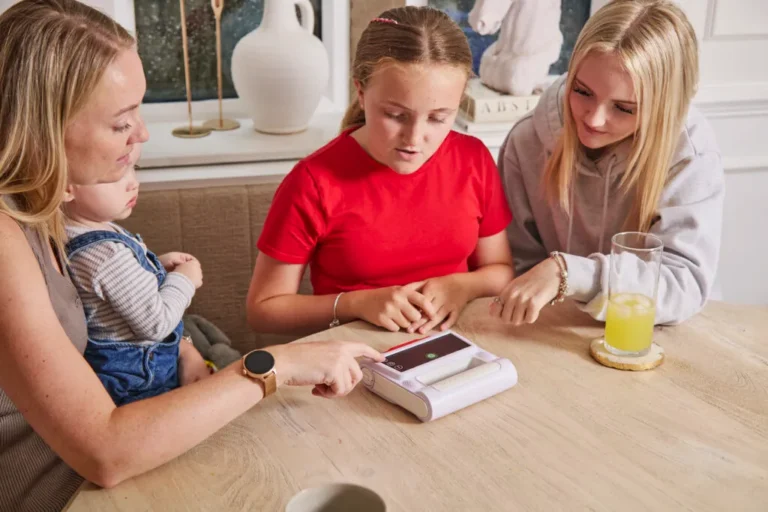
An AED is designed to be used by bystanders with no prior training or medical knowledge. Voice prompts and visual indicators guide the user through pad placement, rhythm analysis, standing clear and resuming CPR. Once the pads are attached, the device checks the heart rhythm and delivers the shock itself if appropriate.
This can help a bystander act more confidently in a stressful outdoor emergency. As explained in our guide on whether an untrained person can use an AED, the responder’s role is to turn it on, follow the prompts and continue until professional help arrives.
A Portable AED Fits Easily Into An Emergency Kit
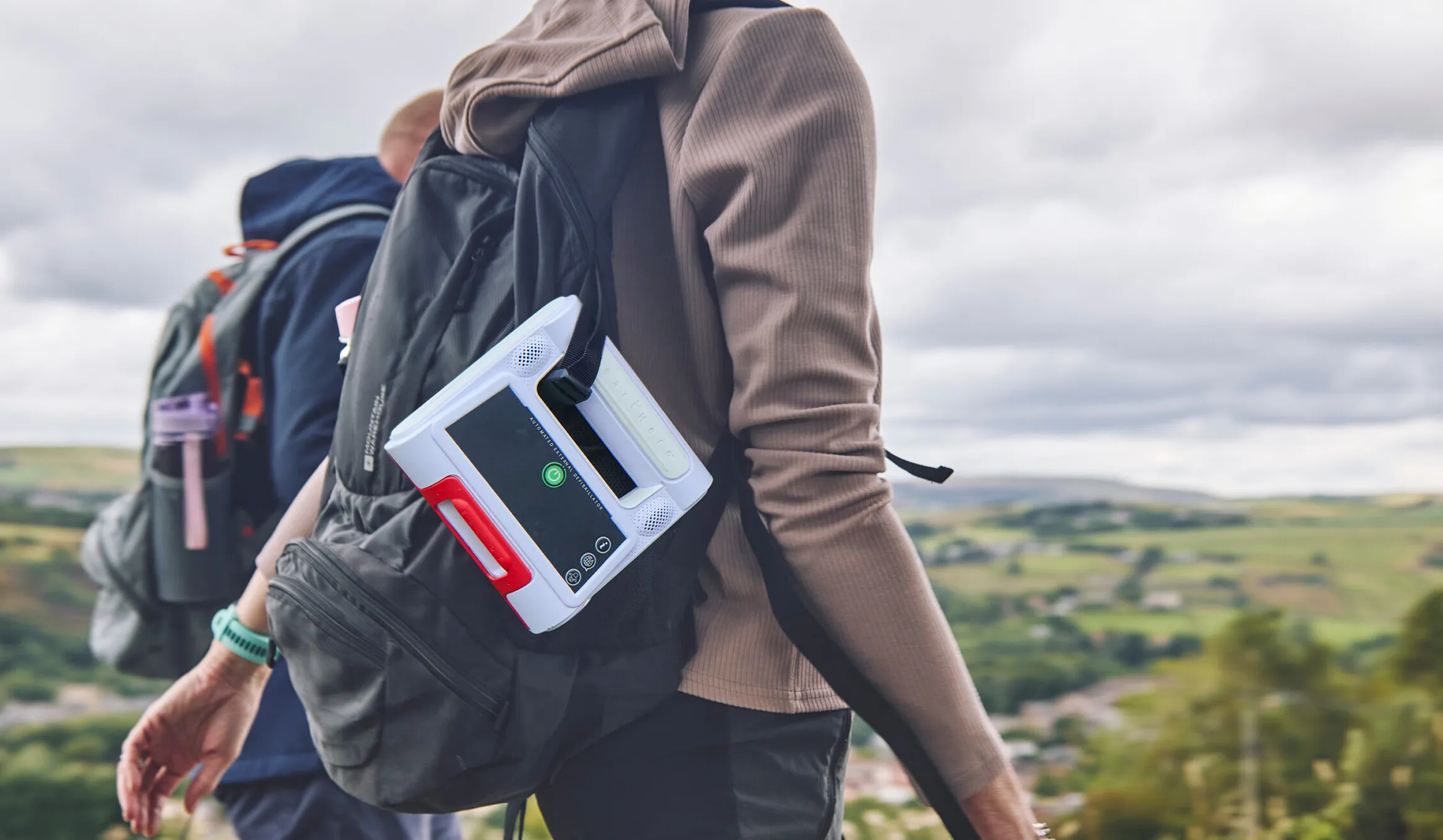
An AED for hiking or camping needs to be lightweight and compact enough to carry with the group’s other emergency equipment. This makes it easier to store in a backpack, vehicle or camp kit alongside first aid supplies and emergency communication devices.
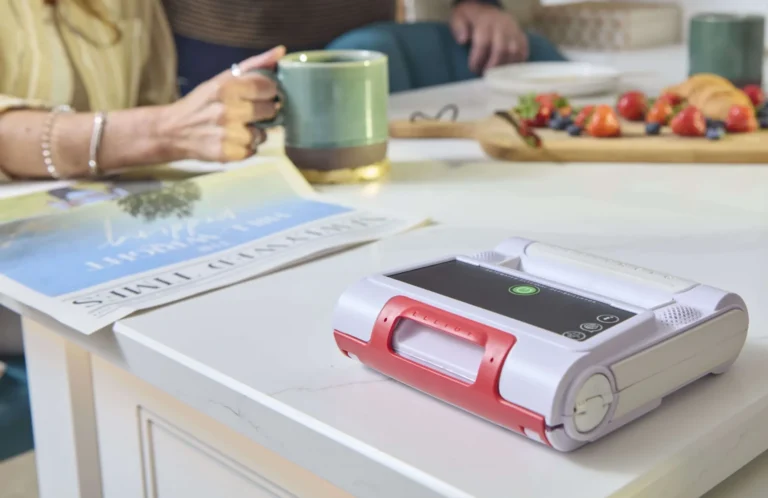
Readiness features are also important. Automatic self-tests and battery and pad alerts help owners confirm the device is ready to use before departure, while adult and child modes make it suitable to use for mixed-age groups.
Elliot combines these features in a portable, fully automatic AED designed for use at home, at work and while travelling. Its voice and visual guidance support confident use in case of an emergency, while readiness monitoring and adult and child modes help the device stay dependable and suitable for a family.
Carrying an AED keeps defibrillation within reach, so emergency response can begin even before emergency services arrive. Early action cannot guarantee survival, but it can give the person a better chance than waiting for equipment to arrive from another location.
For hikers, campers, outdoor clubs and tour operators considering a portable defibrillator, Elliot AED is built for carrying defibrillation access into remote conditions.
Check out Elliot AED before your next hiking or camping trip.
FAQs
Will an AED work without mobile reception?
Yes. The AED’s core function does not depend on mobile reception. It can analyse the heart rhythm and deliver or advise a shock without a phone connection. However, the group still needs a reliable way to request emergency assistance. Mobile coverage can be unreliable in remote areas, so hikers and campers should consider other communication options, such as a PLB or satellite device, where appropriate.
Does carrying an AED replace CPR or a first aid kit?
No. CPR and AED perform different roles during cardiac arrest. CPR helps keep blood moving, while AED analyses the heart rhythm and delivers a shock only when a shockable rhythm is detected. Begin CPR as soon as possible and use an AED when it becomes available. A first aid kit is still required for other injuries and medical situations that may occur outdoors. Read “CPR and AED Together: How They Work as a Team in an Emergency” for a better understanding of how the two interventions support each other.
How should you check an AED before a hiking or camping trip?
Before leaving, inspect the AED for visible damage and confirm that its readiness indicator shows it is operational. Check that the battery and pads are installed, connected and within their expiry dates. Review the manufacturer’s operating and storage limits for the conditions expected during the trip. Keep the device protected during transport and store it where the group can reach it quickly. Everyone should know who is carrying the AED and where it is kept.
Citation
- Heart Foundation – Cardiac Arrest https://www.heartfoundation.org.au/heart-of-the-nation/cardiac-arrest
- St John – Every Minute Counts in a Sudden Cardiac Emergency https://stjohn.org.au/what-we-do/first-aid-products/defibrillators-aed/