



Disclaimer: All information contained herein should be independently verified by the reader and not be relied upon without such verification. An automated external defibrillator is a medical device and should only be used according to the manufacturer’s instructions. Sudden cardiac arrest is a medical occurrence, and appropriate medical advice should be sought. Always dial Triple Zero in an emergency.
Sports clubs bring together players, coaches, officials, volunteers, spectators and families throughout the week. Training sessions, weekend fixtures, tournaments and community events can put hundreds of people through the same facility, often across several fields, courts or activity areas.
Sudden cardiac arrest can happen without warning, even in people who appear fit and healthy. If someone becomes unresponsive and is not breathing normally, the immediate response is to call Triple Zero (000), begin CPR and use an automated external defibrillator (AED) as soon as one is available.
For a sports club, being prepared therefore involves more than simply purchasing an AED. The device needs to be accessible, the club needs a clear emergency response plan and the AED needs to remain ready for use.
Here are five practical ways sports clubs can incorporate an AED into their cardiac emergency preparation.
Place the AED Where It Can Be Reached Quickly
An AED can only help if someone can reach it quickly. For this reason, a defibrillator in sports clubs should be positioned based on how the facility is actually used, rather than simply placed wherever there is available space.
Consider the areas where players, officials and spectators spend time, such as playing fields, courts, clubrooms, change rooms, spectator areas and training areas. The AED should be positioned somewhere visible, clearly signposted and accessible whenever club activities are taking place. Avoid locations that may be locked when the clubhouse, office or canteen is unattended.
Clubs with large grounds or multiple playing areas should also consider retrieval time from the furthest active area. Coaches, team managers, officials and regular volunteers should all know where the device is kept. Clear signage can also help visiting teams, spectators and casual volunteers who may be unfamiliar with the facility.
For a clearer understanding of what happens once the device is retrieved, read our guide to what an automated external defibrillator is and how it works.
Create a Clear Cardiac Emergency Response Plan and Assign Roles
When someone collapses, the club should already have a clear cardiac emergency response in place.
If a person is unresponsive and not breathing normally, the immediate priorities are to call Triple Zero (000), begin CPR and retrieve the AED. When several people are present, these tasks can occur simultaneously: one person calls emergency services, another starts CPR and another brings the AED. Assigning these responsibilities beforehand can help coaches, officials and volunteers understand what needs to happen if they are present during an emergency.
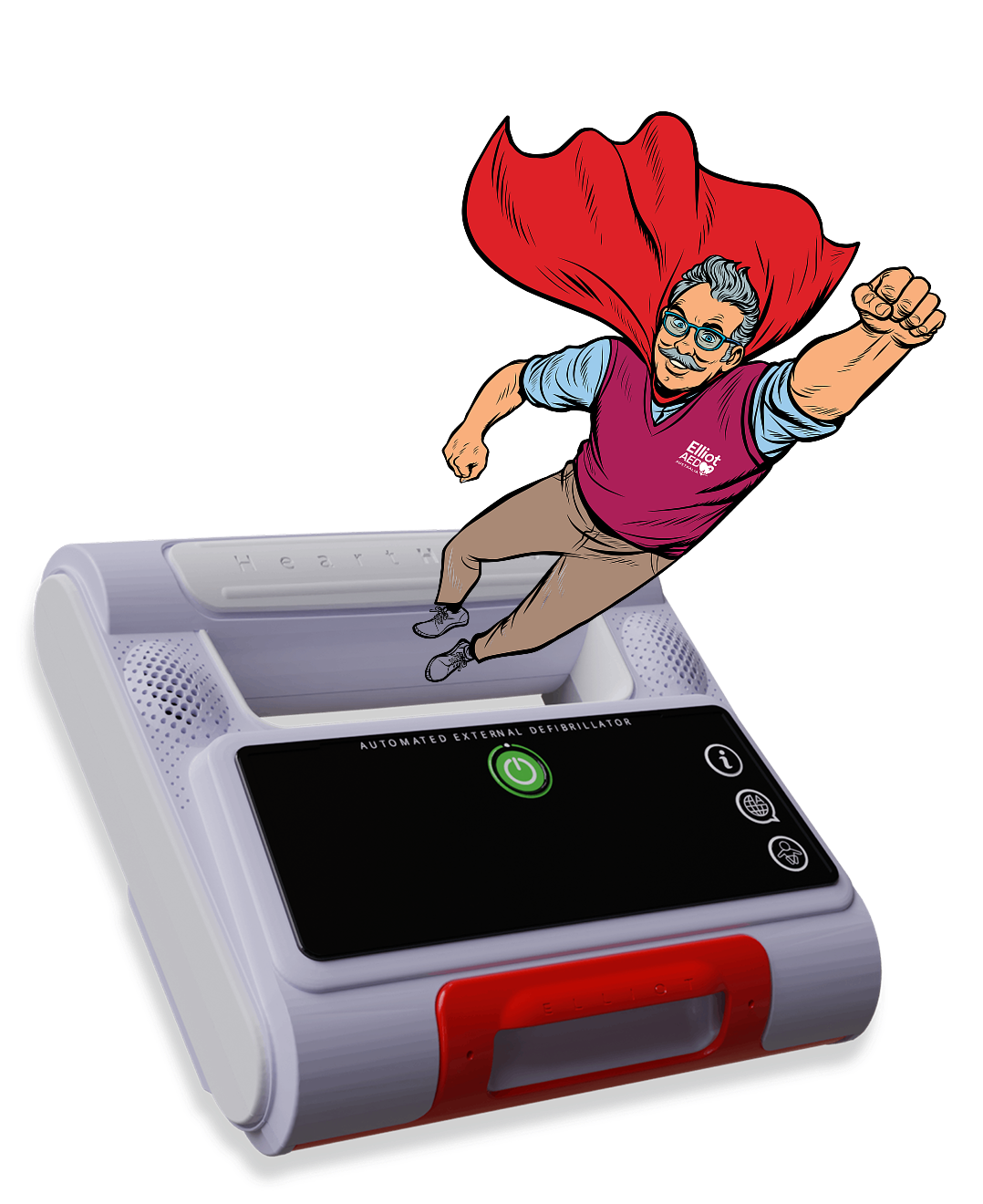
The person retrieving and using the AED does not need to be a medical professional. AEDs are designed to guide any responder through the process, step by step. Elliot is a fully automatic AED designed for everyday users, with a red activation handle that starts the process, clear voice prompts that guide each step and a visual prompt panel that supports the responder in real time.
The plan should also include logistical information that emergency services may need, such as the club’s full address, field or court numbers, vehicle access points and the most suitable gate or entrance for an ambulance.
Make sure coaches, team managers, officials and regular volunteers are familiar with the club’s cardiac emergency plan. A simple written summary can also be displayed near the AED or wherever first aid supplies are kept as a quick reference. The response should not depend entirely on the presence of a nominated first aider.
Read More: CPR and AED Together: How They Work As a Team In An Emergency
Plan AED Access for Training, Home Games and Away Activities
A club’s emergency planning should extend beyond its main clubrooms. Training may take place on secondary fields or courts, while tournaments, camps, community events and away fixtures can take teams to other venues.
Before these activities, consider whether an AED will be readily accessible rather than assuming the venue will have one nearby. For clubs that regularly move between locations, portability can make it easier to keep emergency equipment with the team. A lightweight portable AED can be easier to take between playing areas, vehicles and external venues.
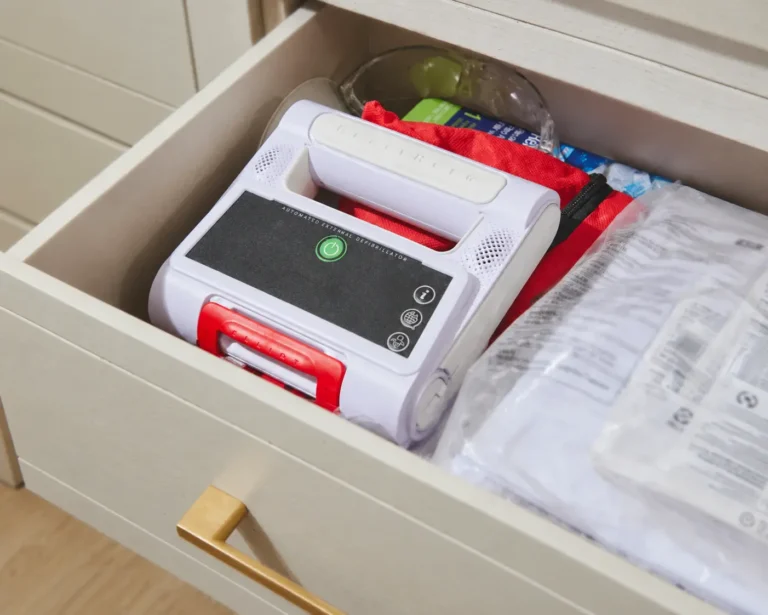
Elliot is designed with this type of portability in mind. It is lightweight enough to carry with other emergency equipment, supporting use across a range of indoor and outdoor sporting environments.
If the portable defibrillator is taken away from its usual location, make sure relevant people know who has it and where it will be kept during the activity.
Prepare for Both Junior and Senior Club Members
Many community sports clubs cater to both junior and senior members, so their cardiac emergency planning should account for different age groups.
Relevant responders should understand whether the club’s AED has separate adult and child settings and how to select them. This is especially important when the same device is used across junior and senior teams.
Elliot includes a dedicated child mode and uses pre-connected pads for adult and paediatric use. Adult mode is the default, while selecting child mode adjusts the device for a paediatric patient, including reducing the shock energy from 150 joules for adults to 50 joules for children.
Responders should follow the device prompts during an emergency, but being familiar with these features beforehand can help them understand how the AED is intended to be used for different age groups.
Make Sure the AED Is Always Ready to Use
An AED may go unused for a long period, so ongoing maintenance is important to keep it ready for an emergency.
Nominate a committee member, safety officer or other responsible person to oversee the device and include AED checks in the club’s regular safety procedures. Monitor battery condition, pad expiry dates and overall device status, and replace pads or batteries when required. The AED should also be kept clean, protected and returned to its designated location after being moved.
Elliot supports this with automatic self-checks and battery, pad and device-status monitoring. Bluetooth® and LTE connectivity also allow readiness information to be monitored remotely, reducing reliance on manual checks alone. Elliot uses standard CR123A batteries, which can be replaced when required.
The club’s AED arrangements should also be reviewed when facilities or operations change. New playing areas, additional teams or greater use of multiple spaces may affect how well the device can be accessed across the venue.
Cardiac emergency preparedness at a sports club depends on more than having an AED mounted somewhere on the premises.
The device needs to be easy to reach. Coaches, officials and volunteers should understand the response plan and their roles. AED access should be considered across training, home fixtures and activities away from the main ground, while ongoing checks help ensure the device remains ready throughout the season.
An AED does not replace calling Triple Zero or performing CPR. It forms part of a coordinated emergency response that can begin immediately while professional help is on the way.
Explore the Elliot automated external defibrillator and its features for sports club emergency preparedness.
FAQs
Can an AED be used on a player who has a pacemaker or implanted defibrillator?
Yes. An AED can generally be used on someone with an implanted pacemaker or defibrillator if they are in suspected sudden cardiac arrest. The electrode pad should not be placed directly over an implanted device. Follow the AED’s pad-placement instructions and the directions provided by the Triple Zero operator.
Can an AED be used if a player collapses on a wet field or near water?
An AED can be used in wet sporting environments, but the responder should take reasonable steps to make the situation safe. Move the person away from standing water where possible, and dry the chest before applying the pads to ensure proper contact with the skin. Follow the AED’s instructions and make sure nobody is touching the person during rhythm analysis or shock delivery.
What should a sports club do with its AED after it has been used in an emergency?
After an AED has been used, it should be checked and prepared before being returned to service. Used electrode pads need to be replaced, and the device should be checked for damage or contamination and serviced according to the manufacturer’s instructions. Its self-test should then confirm readiness before it is returned to its usual storage location.