


Disclaimer: All information contained herein should be independently verified by the reader and not be relied upon without such verification. An automated external defibrillator is a medical device and should only be used according to the manufacturer’s instructions. Sudden cardiac arrest is a medical occurrence, and appropriate medical advice should be sought. Always dial Triple Zero in an emergency.
AED desert generally refers to an area where timely access to an automated external defibrillator (AED) is limited during a sudden cardiac arrest. It does not necessarily mean there are no automated external defibrillators nearby. A device may exist within the area but still be too far away, inaccessible after hours or located somewhere difficult to reach during an emergency.
AED deserts are not limited to remote Australia. They can exist in suburban neighbourhoods, residential areas, workplaces and community settings. Reducing these access gaps can help improve how quickly and reliably Australians can receive defibrillation when needed.
Help People Receive Defibrillation Sooner
Sudden cardiac arrest is a time-critical emergency. The Heart Foundation states that when CPR is performed and an AED is used within the first three to five minutes of cardiac arrest, survival rates can increase to 60–70%. [1]
If the nearest automated external defibrillator is too far away, valuable time can be lost locating and retrieving it. Reducing AED deserts can shorten this delay and increase the likelihood of defibrillation being provided in the critical early minutes.
While the AED is being retrieved, someone should call Triple Zero (000) and begin CPR. Our guide to how CPR and an AED work together explains how both support the emergency response.
Improve Emergency Preparedness in Regional and Remote Australia
Ambulance response can take longer in regional and remote areas, even when a cardiac arrest occurs relatively close to emergency services. A Western Australian study of out-of-hospital cardiac arrests from 2015 to 2022 found that ambulance response times were longer with increasing remoteness. Response times also increased as cardiac arrests occurred further from towns. [2]
For people living or working in regional and remote locations, local access to a portable defibrillator can allow defibrillation before emergency services arrive. It does not replace calling Triple Zero (000), performing CPR or receiving professional medical care.
Make Nearby AEDs Practically Accessible When They Are Needed
An AED being geographically close does not necessarily mean it is accessible during an emergency. For example, an AED located inside an office, school, gym, shop or community facility may not be accessible when the premises are closed. Access can also be affected by where the AED is positioned and whether a responder can locate and retrieve it quickly.
Reducing AED deserts means considering when and how easily a device can be reached, not just how many AEDs are installed. This is particularly relevant when planning access to a defibrillator for an office, sporting facility or other location with limited operating hours.
Improve Access Where Cardiac Arrests Actually Occur
Public AEDs are often located in shopping centres, sporting facilities, workplaces and other high-traffic locations. However, the Heart Foundation reports that around 80% of cardiac arrests in Australia occur at home. [3]
This creates an access gap between where many AEDs are installed and where many cardiac arrests occur. A neighbourhood may have several public AEDs, while homes within that area may still be a considerable distance from the nearest accessible device.
Reducing AED deserts means improving access in residential settings as well as public places. For some households, keeping a home defibrillator can provide more direct access than relying on a public AED during an emergency.
Read More: Should Every Australian Home Have an AED?
Reducing AED deserts is about improving practical access to defibrillation across the places Australians live, work and spend time. Distance, regional isolation, restricted access and the location of existing devices can all determine whether an AED is realistically available during a cardiac emergency.
Increasing the number of AEDs is only part of improving access. Where devices are located, when they can be accessed and how quickly they can be retrieved are also important considerations. Homes, workplaces, sporting clubs and community organisations should consider whether a defibrillator would be readily accessible if a cardiac arrest occurred at their location.
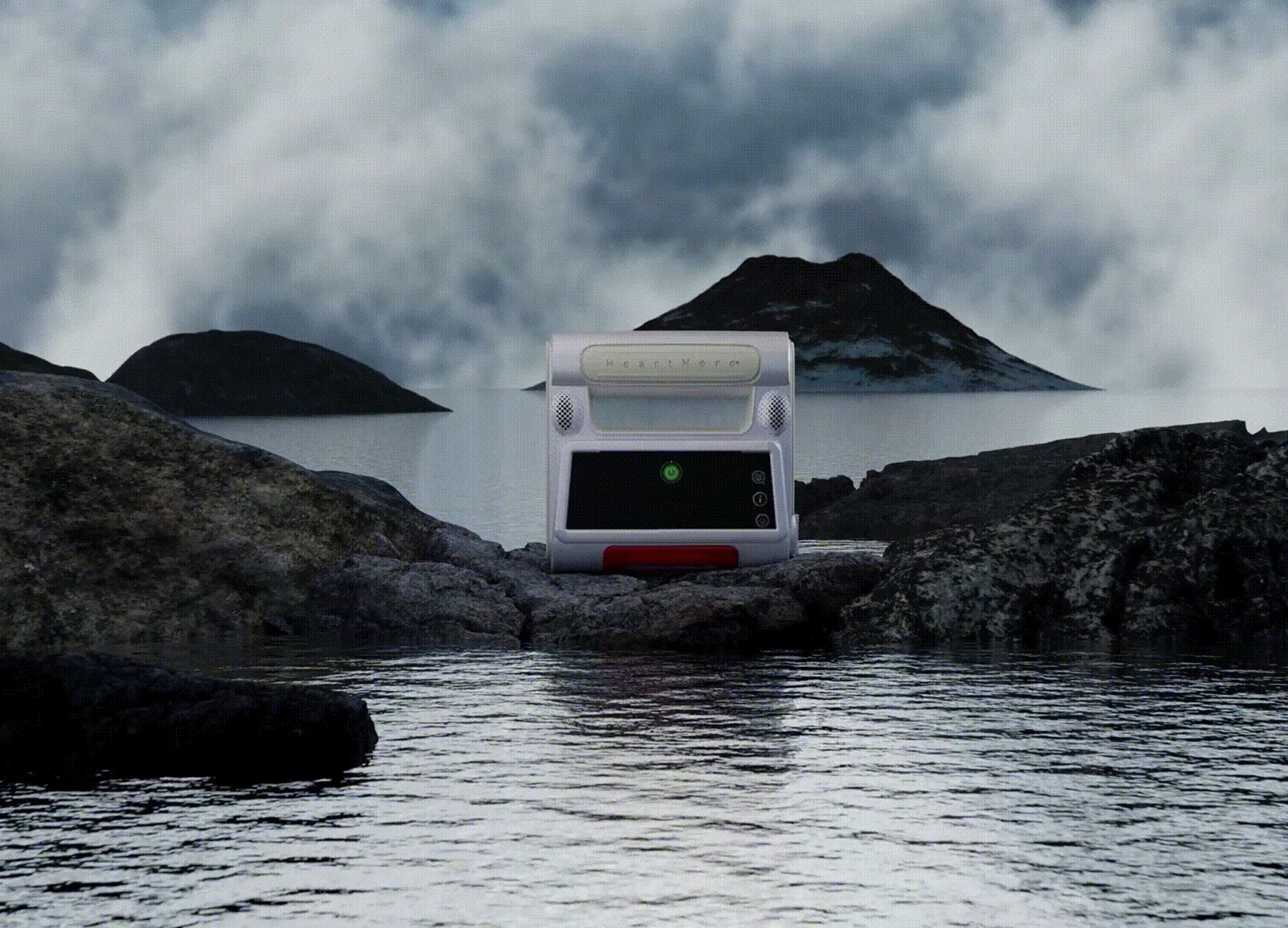
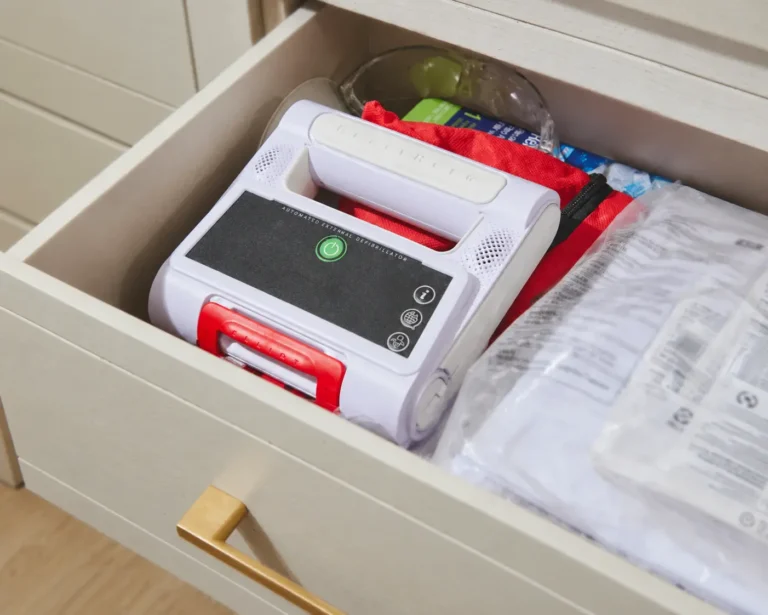
Elliot is a portable, lightweight and fully automatic AED designed for home and personal use and listed on the TGA’s ARTG. With clear voice and visual prompts, adult and child modes and device-readiness monitoring, Elliot makes it easier for households, workplaces and organisations to keep an AED readily accessible and know that the device is ready for use.
Explore Elliot AED to find out how its portable design, guided operation and readiness monitoring can support cardiac emergency preparedness at home, at work or on the move.
FAQs
What can communities do to reduce AED deserts?
Communities can improve AED access by identifying locations where devices are difficult to reach, considering where new AEDs would provide useful coverage, and making existing devices easy to locate and access. Businesses, sporting clubs, community organisations and other facilities can also contribute by providing AEDs in locations where people regularly gather.
How quickly should an AED be accessible during a cardiac emergency?
Defibrillation should occur as early as possible. The Heart Foundation states that when CPR is performed and an AED is used within the first three to five minutes of cardiac arrest, survival rates can increase to 60–70%. [1] This is why AED access should be considered in terms of how quickly a device can be reached and brought to the person in need, rather than distance alone.
Can anyone use public AEDs during a cardiac emergency?
Yes. AEDs are designed to guide users through each step, so they can be used by people without formal AED training. During a cardiac emergency, call Triple Zero (000) and follow the AED’s prompts and the instructions provided by the emergency call-taker.
Citations
-
- Heart Foundation – Shockingly Simple: Restart a Heart https://www.heartfoundation.org.au/shockingly-simple
- National Library of Medicine (NIH) – Dispelling the remoteness myth: a geospatial analysis of where out-of-hospital cardiac arrests are occurring in Western Australia (research paper) https://pubmed.ncbi.nlm.nih.gov/39502741/
- Heart Foundation – Cardiac Arrest https://www.heartfoundation.org.au/heart-of-the-nation/cardiac-arrest