



Disclaimer: All information contained herein should be independently verified by the reader and not be relied upon without such verification. An automated external defibrillator is a medical device and should only be used according to the manufacturer’s instructions. Sudden cardiac arrest is a medical occurrence, and appropriate medical advice should be sought. Always dial Triple Zero in an emergency.
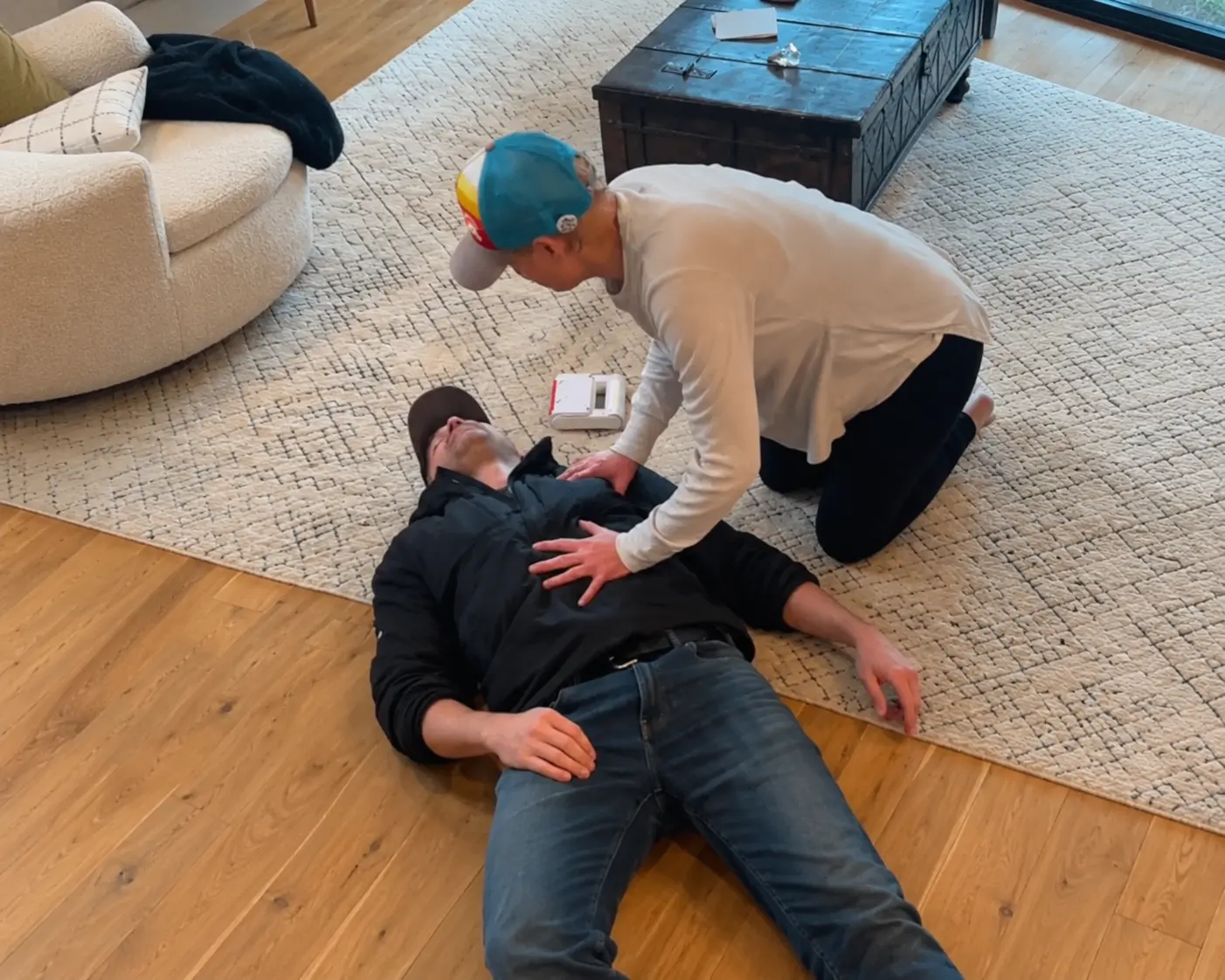
Sudden cardiac arrest can happen without warning. A person may collapse, become unresponsive and stop breathing normally, leaving bystanders to respond before paramedics arrive. For someone who has never faced a cardiac emergency before, that responsibility can feel daunting, especially when an automated external defibrillator is involved.
You may worry you are not qualified to use an AED, but modern AEDs reduce much of that uncertainty by providing visual and voice prompts that guide the responder through the process. Fully automatic AEDs also deliver the shock automatically when a shockable rhythm is detected.
Understanding the most common AED myths can help bystanders feel more confident about using an AED when needed.
Myth 1: You Need Training and Have to Know Exactly How to Use an AED
You do not need to be a doctor or paramedic to use an AED during an emergency. An AED guides the responder rather than relying on them to remember every step. Voice prompts and visual cues show where to place the pads, when to stand clear and when to continue CPR.
Familiarity with an AED and first aid knowledge can improve confidence, but the responder does not need to interpret an ECG or memorise the full procedure.
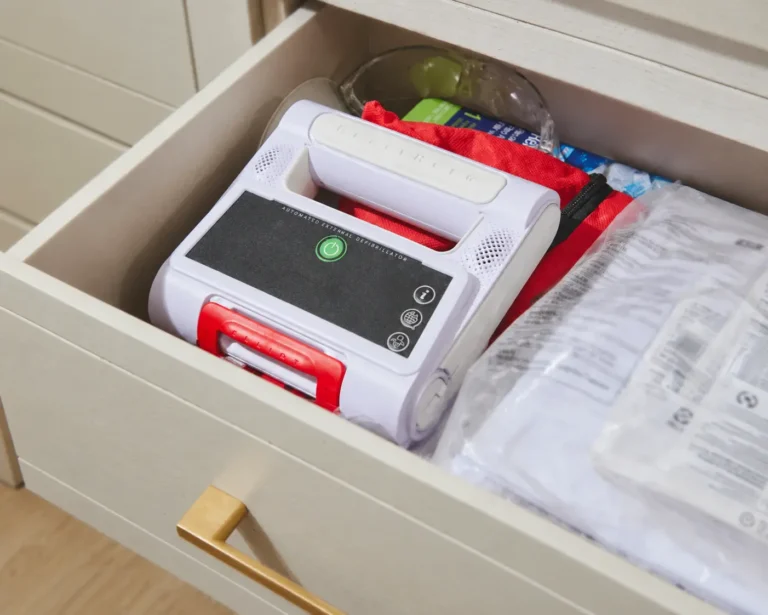
Elliot AED supports this guided approach with clear voice prompts, visual indicators and pre-connected pads that simplify the response process.
Read More: Can An Untrained Person Use An AED?
Myth 2: I Have to Decide Whether the Person Needs a Shock
One of the biggest concerns about using an AED is the fear of shocking someone who does not need it. The responder does not make that decision. Once the pads are correctly attached, the AED analyses the heart rhythm and determines whether a shock is appropriate. If no shockable rhythm is detected, no shock is delivered.
AEDs also differ in how they deliver the shock. Semi-automatic models instruct the responder to press a shock button. A fully automatic AED, such as Elliot, warns everyone to stand clear and delivers the shock automatically if required.
Myth 3: It Is Safer to Wait for Paramedics or Someone More Experienced
Waiting for a medically trained person may feel like the safer option, but sudden cardiac arrest requires an immediate response. The Heart Foundation states that when CPR is performed and an AED is used within the first three to five minutes of cardiac arrest, survival rates can increase to 60–70%. [1] If a person is unresponsive and not breathing normally, call Triple Zero (000), start CPR and use an AED as soon as one is available.
When several people are present, one can call emergency services, another can begin CPR and another can retrieve the AED. While the AED itself guides you through the process, the Triple Zero operator can also provide instructions during the emergency.
Myth 4: Once an AED Arrives, CPR Is No Longer Needed
CPR and defibrillation have different roles. CPR helps maintain blood circulation, while the AED checks the heart rhythm and may deliver a shock when a shockable rhythm is detected.
CPR should continue while the AED is being retrieved and prepared. Once the pads are attached, the device will instruct responders when to stand clear so it can analyse the rhythm. CPR then again resumes when prompted.
Some AEDs also provide support during CPR. Elliot, for example, provides CPR prompts and a metronome to help guide the responder’s compression rhythm.
Read More: CPR and AED Together: How They Work As a Team In An Emergency
Myth 5: If the AED Says No Shock Is Needed, the Emergency Is Over
Hearing that no shock is required can easily be misunderstood as a sign that the person has recovered. That is not necessarily the case.
It means the AED did not detect a shockable rhythm during that particular analysis. The pads should remain attached, and CPR should resume when prompted.
The AED can reassess the heart rhythm after another CPR cycle and may advise or deliver a shock if the rhythm changes. Continue following the AED and Triple Zero operator’s instructions until emergency services take over.
Myth 6: AEDs Cannot Be Used on Children
AEDs can be used in paediatric cardiac emergencies if the device supports paediatric use. Some require separate child pads, while others have a setting that adjusts the device for a younger patient. The instructions for the specific AED should always be followed.
Elliot has a dedicated Child Mode that should be selected before the pads are applied. The same pre-connected pads are used for adults and children, with different pad placement for a child. Child Mode also delivers a lower energy shock (50 joules) than Adult Mode (150 joules), matched to the difference in body size.
Paediatric functionality can be especially relevant in schools and sporting facilities where both adults and children may be present. Anyone considering a defibrillator for a school or sports club should check how the model supports paediatric use.
Myth 7: A Pacemaker, Implanted Defibrillator or Wet Chest Means You Cannot Use an AED
An implanted pacemaker or defibrillator does not automatically prevent AED use. In such cases, the pads should not be placed directly over the implanted device, and the AED’s pad-placement instructions should still be followed.
Moisture is another common concern. A wet or sweaty chest does not automatically prevent AED use. The person’s chest should be dried so the pads can adhere firmly.
Good pad contact helps the AED analyse the heart rhythm and deliver a shock effectively if required. If the device detects poor contact, it may prompt the responder to check the pads.
The key is to follow the AED’s instructions and the guidance provided by the Triple Zero operator.
Much of the hesitation around AEDs comes from the fear of making the wrong decision. Modern AEDs reduce that uncertainty by analysing the heart rhythm, determining whether a shock is required and guiding the responder through the process.
Having a portable defibrillator nearby can also reduce the time spent locating a public device during an emergency.
Elliot is a lightweight, portable and fully automatic AED with clear voice and visual prompts and pre-connected adult and child pads. Pulling the red activation handle powers on the device and provides access to the pads, helping the responder move quickly into the guided response.
For those considering a home defibrillator or portable AED for emergency preparedness, explore the Elliot AED and its features designed to support confident emergency response.
FAQs
Will an AED still work without mobile reception?
Yes. Elliot can still function as an AED without a cellular connection. Its automatic emergency-services contact feature, however, requires an active cellular connection and completed registration. When these requirements are met, Elliot can automatically contact emergency services when the pads are applied. If cellular connectivity is unavailable, emergency services must be contacted separately. In all cases, a responder should also call Triple Zero (000).
What should I do if the AED says the pads are not making good contact?
Follow the device prompts and check that the pads have been fully removed from the blue liner and are pressed firmly onto bare, clean and dry skin. Continue following the AED’s prompts if the poor-contact warning remains.
What should happen to an AED after it has been used?
After use, an AED should be returned to a ready state according to the manufacturer’s instructions. For Elliot, both the single-use electrode pad cartridge and the batteries must be replaced after each use. The device should also be checked for damage, dirt or contamination. After the new batteries are installed and the power-on self-test is completed, check that the System OK indicator is blinking green before returning Elliot to storage.
Citations
- Heart Foundation – Shockingly Simple: Restart a Heart https://www.heartfoundation.org.au/shockingly-simple