



Disclaimer: All information contained herein should be independently verified by the reader and not be relied upon without such verification. An automated external defibrillator is a medical device and should only be used according to the manufacturer’s instructions. Sudden cardiac arrest is a medical occurrence, and appropriate medical advice should be sought. Always dial Triple Zero in an emergency.
During sudden cardiac arrest, rapid access to an automated external defibrillator (AED) is essential because defibrillation is time-critical. An AED therefore needs to be somewhere it can be reached and brought to the patient without unnecessary difficulty.
When choosing an AED, operational performance, reliability and readiness are key factors, but size and weight also affect how practical the device is to store, retrieve and transport. A compact, lightweight AED is easier to keep accessible at home, at work or on the move, and easier for a bystander to carry during an emergency.
Why Size and Weight Affect AED Accessibility
Compact dimensions, lower weight and portability each affect automated external defibrillator accessibility in different ways, from finding a suitable storage location to retrieving the device during an emergency and taking it beyond a fixed location.
A Compact AED Is Easier to Store in an Accessible Location
An AED needs to be stored somewhere people can identify and reach quickly. A compact device requires less space, giving households and organisations more flexibility to choose a practical, accessible location. In workplaces, sporting clubs and other organisations, its location should be included in the cardiac emergency response plan.
This flexibility is particularly useful where suitable storage space is limited, including homes, workplaces, vehicles, caravans and boats.
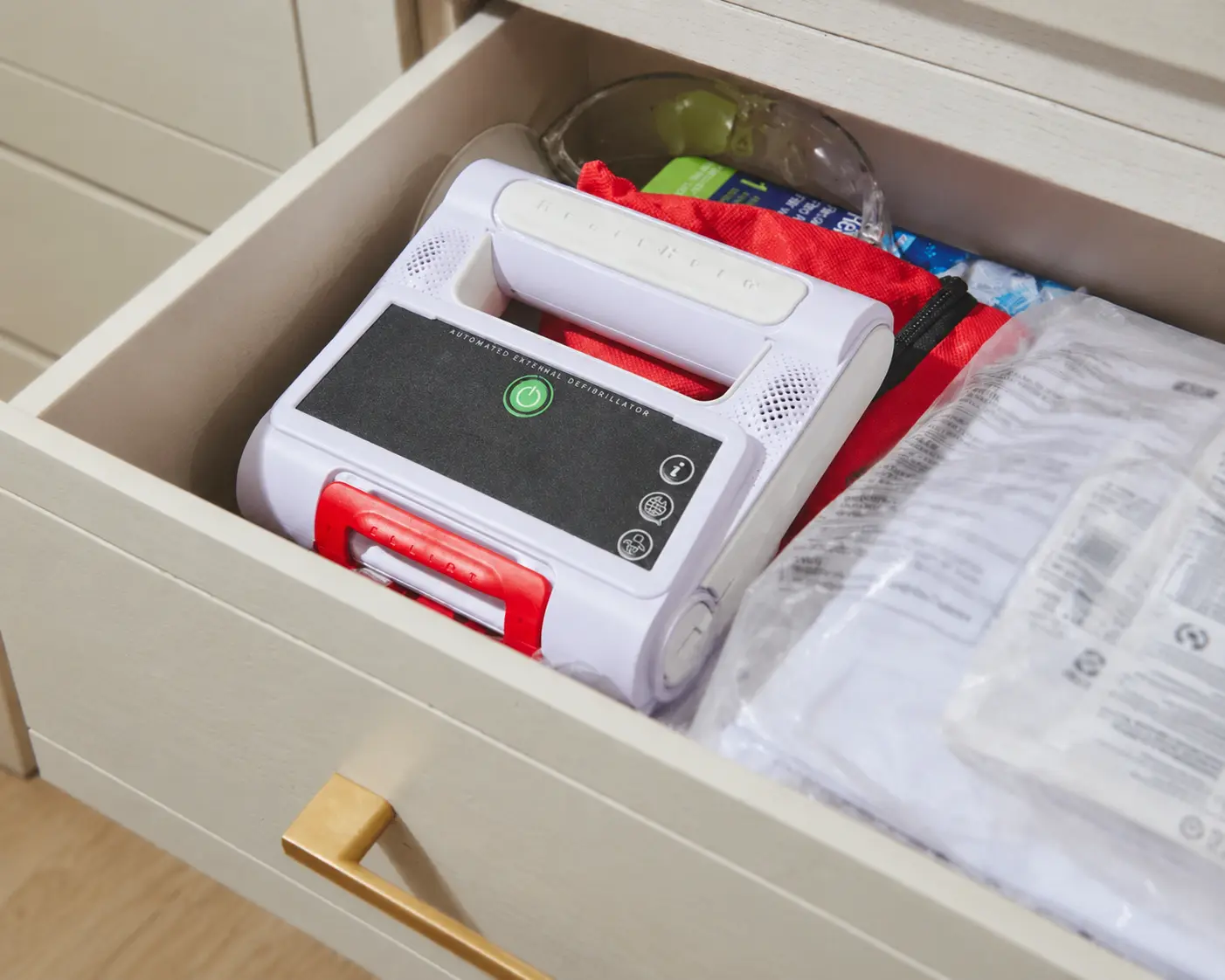
Storing an AED compactly should not mean hiding it away. A device stored in a cupboard or drawer offers little practical value if people do not know where it is or cannot access it. For more on home AED placement and preparedness, read our article Should Every Australian Home Have an AED?
A Lightweight AED Is Easier to Retrieve and Carry During an Emergency
During suspected sudden cardiac arrest, the AED may need to be carried from its storage point to the person while CPR is underway and Triple Zero (000) is being called.
A lightweight unit reduces the physical burden on the person retrieving it, making it easier for family members, staff, coaches, volunteers or other bystanders to carry. This can be especially useful across a large workplace, sporting ground, multi-level building, property or outdoor environment.
In these settings, a lower weight makes it easier to move the AED from storage to where it’s needed during a time-critical response.
A Portable AED Is More Practical to Move Between Locations
A fixed AED provides access at one location, but people don’t always stay at one place. A compact, lightweight AED can travel with its owner between locations rather than remaining permanently at home or another fixed site.
Examples include taking an AED to a holiday property, on road trips, while caravanning or boating, between worksites or to sporting and outdoor activities. Portability can extend access to defibrillation to places where a public or permanently installed AED may not be readily available.
It may also be relevant for households where someone has a higher risk of sudden cardiac arrest. A previous heart attack can increase that risk, and cardiac arrest can occur after a heart attack or during recovery. [1] Individual cardiac risk varies, so anyone considering AED ownership should factor in medical advice.
Important AED Features To Consider Beyond Size and Weight
Size and weight can make an AED easier to store, carry and transport, but they are only part of what makes a device practical for emergency use. Other features affect how straightforward the AED is to use, how well it supports different situations and how easily it can be kept ready over time.
- Fully automatic operation: The AED analyses the heart rhythm and, when a shock is required, delivers it automatically without the responder needing to press a shock button.
- Clear voice and visual prompts: Simple prompts can guide the responder through pad placement and the following steps, which can be especially helpful for people with little or no prior experience using an AED.
- Adult and child capability: An AED that can be used for both adults and children provides greater flexibility for households, workplaces and other settings where people of different ages may be present.
- Durability: Water and dust resistance, operating temperature range and overall construction are important considerations if the AED will be kept in vehicles, workplaces, outdoor environments or other demanding settings.
- Australian regulatory status: An AED supplied in Australia should be listed on the TGA’s Australian Register of Therapeutic Goods (ARTG).
- Device readiness monitoring: An AED should provide a clear way to confirm that the battery, electrode pads and device itself are ready for use. Features such as automatic self-testing, battery and pad status monitoring, and connected readiness alerts can help identify issues before the AED is needed in an emergency.
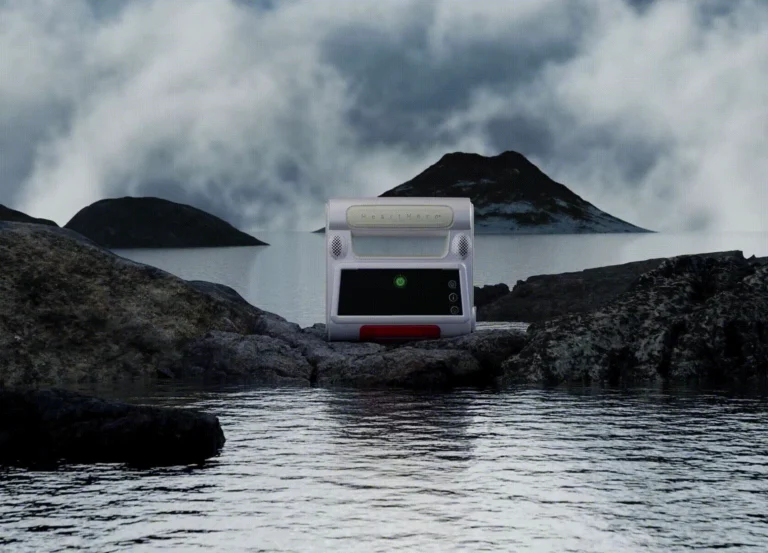
Elliot brings these features together in a portable AED weighing 680g, including batteries and pads. Its compact design is supported by fully automatic operation and continuous device-readiness monitoring, providing portability without making size and weight the only considerations. Elliot is also listed on the ARTG.
The practical value of a compact, lightweight AED ultimately comes down to access. Whether kept at home, in a workplace or moved between locations, the device needs to be within reach and accessible to the person experiencing cardiac arrest when needed.
It’s best to consider size and weight alongside the AED’s operation, readiness and suitability for the environment where it will be kept.
Explore the Elliot automated external defibrillator to learn more about its portable design and emergency-ready features.
FAQs
Does a portable AED need a special carrying case?
A dedicated carrying case can help protect a portable AED during storage and transport while keeping the device organised and easy to access. Elliot offers a hardshell carrying case designed specifically for the Elliot AED, with a structured exterior, internal straps and a reinforced carry handle to keep the device secure while still allowing quick access during an emergency.
Can an AED be kept in a car?
An AED can be kept in a car, provided it remains within the device’s specified storage conditions. Elliot has a shipping and storage temperature range of -40°C to 70°C, accommodating a wide range of environmental conditions. However, temperatures inside parked vehicles can still vary considerably, so the storage location should be considered carefully.
Can you take a portable AED on a plane?
Portable AEDs can generally be taken when travelling by air, but airline requirements can vary, particularly for medical devices and batteries. Check with the airline before travelling to confirm its current requirements for carrying the AED and its batteries in cabin or checked baggage.
Citations
- American Heart Association – Heart Attack and Sudden Cardiac Arrest Differences https://www.heart.org/en/health-topics/heart-attack/about-heart-attacks/heart-attack-or-sudden-cardiac-arrest-how-are-they-different