



Disclaimer: All information contained herein should be independently verified by the reader and not be relied upon without such verification. An automated external defibrillator is a medical device and should only be used according to the manufacturer’s instructions. Sudden cardiac arrest is a medical occurrence, and appropriate medical advice should be sought. Always dial Triple Zero in an emergency.
Residential aged care facilities support a population concentrated in Australia’s oldest age groups, where health needs are often more complex. According to the GEN Aged Care Data for 2024–25, 59% of people living in permanent residential aged care in Australia were aged 85 and over. [1]
With more than half of residents aged 85 and over, preparation for serious medical events, including sudden cardiac arrest, is an important part of resident safety. Where resuscitation is consistent with the resident’s documented care preferences and plan, timely access to an automated external defibrillator (AED) can form part of the emergency response, alongside CPR and emergency medical assistance.
Cardiovascular disease becomes more common with age. In 2022–24, 25.6% of Australians aged 75 and over were living with heart, stroke or vascular disease, compared with 14.1% of those aged 65–74. [2] Older Australians also accounted for 68% of cardiovascular disease hospitalisations in 2023–24. [2]
These figures do not mean cardiac arrest is inevitable with age, but they provide useful health context when considering cardiac emergency preparedness in aged care. For more detail on the causes and underlying conditions, read our guide on What Is Sudden Cardiac Arrest and Why Does It Happen?
Sudden cardiac arrest occurs when the heart’s electrical system malfunctions, causing it to stop pumping blood effectively. The person typically becomes unresponsive and stops breathing normally. Some cardiac arrests involve shockable rhythms, including ventricular fibrillation, that an AED can analyse and treat with defibrillation.
NSW Ambulance data shows that in 2024, 9.2% of adult out-of-hospital cardiac arrests in NSW occurred in residential aged care facilities. [3] Where resuscitation is appropriate, rapid access to defibrillation is an important part of the cardiac arrest response. Our guide, CPR and AED Together: How They Work as a Team in an Emergency, explains how the two interventions support different parts of a cardiac arrest response.
Cardiac emergency preparedness in aged care must also account for each resident’s documented treatment preferences and care plan. Some residents may have an advance care directive, a documented resuscitation plan or other agreed-upon treatment preferences. Facility procedures should support staff in following those documented wishes, relevant clinical guidance and established emergency procedures, with the necessary care information readily accessible during an emergency.
Effective AED preparedness extends beyond simply having a device onsite. The AED should be positioned where staff can retrieve it quickly from resident rooms and common areas, with clear signage and staff awareness of its location. Larger facilities, multiple floors or separate wings may require more than one device to maintain practical access.
When several staff members are present, responsibilities can be divided so that one person calls Triple Zero (000), another begins CPR, another retrieves the AED and another directs paramedics to the resident. Regular checks of battery condition, pad expiry date and device status, together with emergency drills or scenario reviews, can support ongoing readiness.
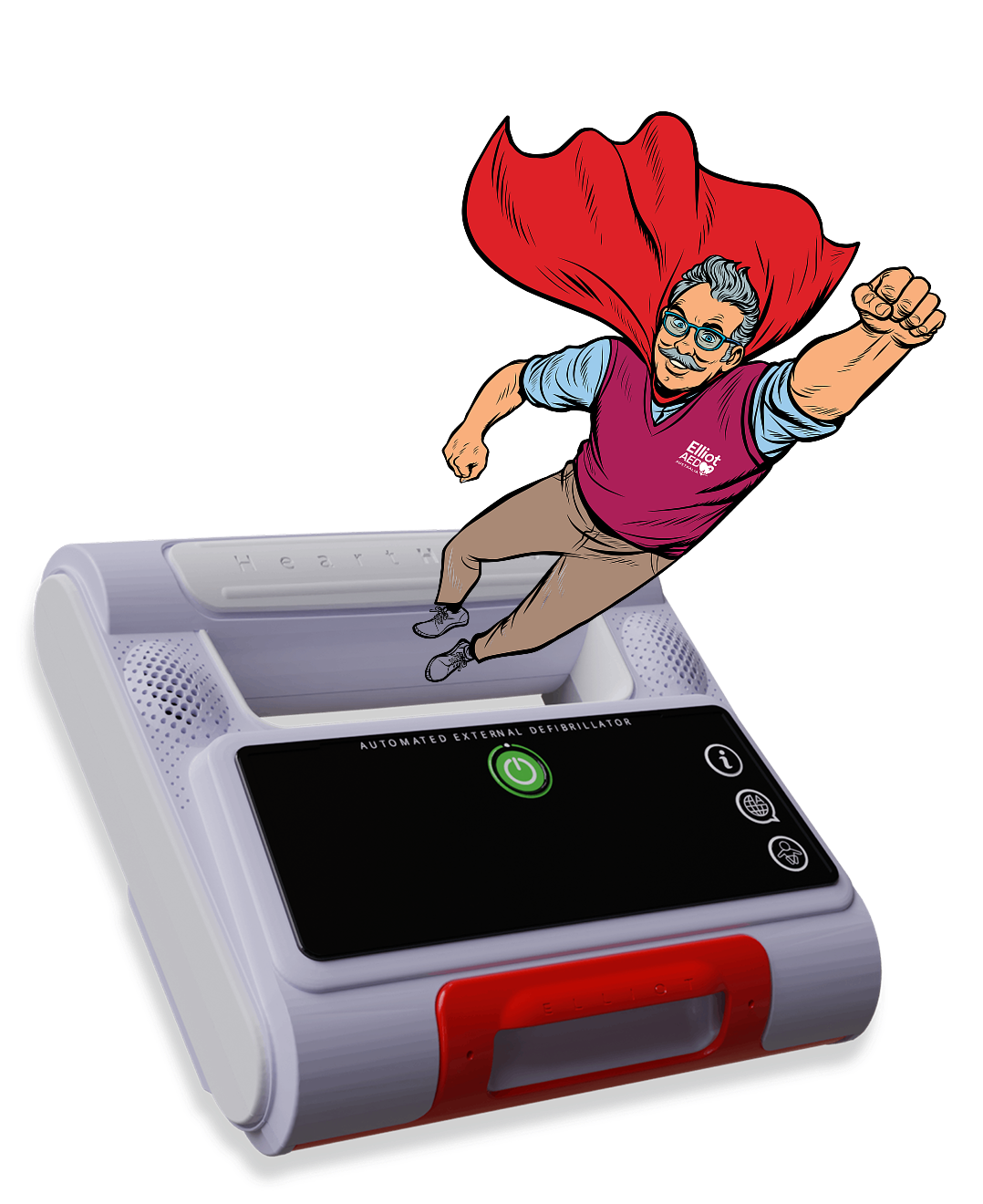
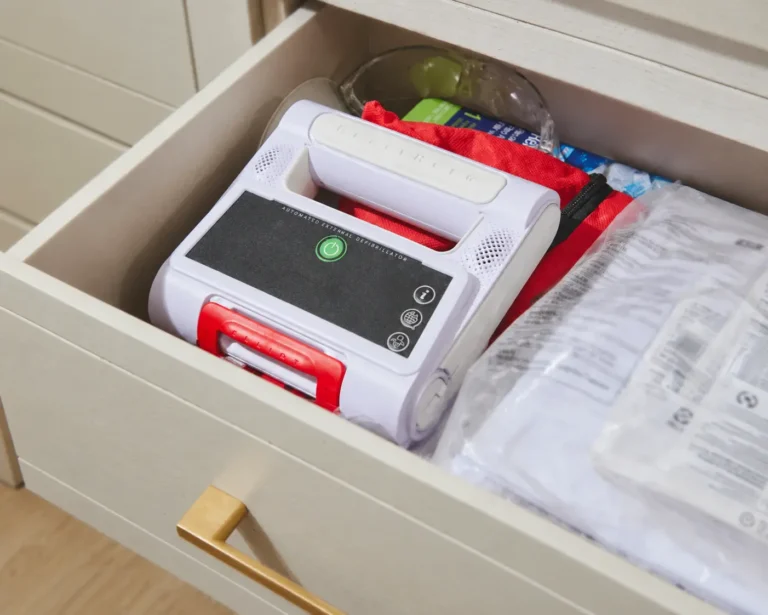
For aged care facilities, an AED should be easy to carry between resident areas, straightforward for staff to operate and simple to monitor between uses. Elliot AED is a lightweight, portable defibrillator weighing 680 g including the batteries and pads, making it practical to carry between resident rooms and shared areas. Pulling the red activation handle provides access to the pre-connected pads and begins voice and visual guidance. Elliot is fully automatic, so it analyses the heart rhythm and delivers a shock itself when an appropriate shockable rhythm is detected without requiring the responder to press a shock button.
Automatic self-tests, battery and pad status monitoring and Bluetooth® and LTE connectivity also help nominated users monitor device readiness over time. For aged care providers assessing automated external defibrillator suppliers, these features can support both emergency use and day-to-day device management.
Protecting aged care residents during a cardiac emergency depends on preparation before an incident occurs. Documented care preferences, timely AED access, clear staff responsibilities and ongoing device readiness all contribute to a more organised response. Where resuscitation is appropriate, having an AED close by can give staff earlier access to defibrillation while emergency services are on the way.
Explore the Elliot automated external defibrillator to learn more about its portability, guided operation and readiness features.
FAQs
Is it mandatory for aged care facilities to have an AED in Australia?
There is no single nationwide requirement that applies to every Australian aged care facility. Requirements can vary between states and territories, so providers should check the legislation and regulatory obligations that apply to their location.
How many AEDs should an aged care facility have?
There is no fixed number. Facility size, layout, number of floors or wings, resident areas and realistic retrieval time should all be considered before deciding how many AEDs to install, along with any applicable state or territory requirements.
Where should an AED be located in an aged care facility?
An AED should be clearly identified, readily accessible and positioned where staff can retrieve it quickly. Larger or more dispersed facilities may need additional locations to reduce retrieval time across the site.
Citation
- GEN Aged Care Data – People using aged care: https://www.gen-agedcaredata.gov.au/topics/people-using-aged-care?trk=public_post_main-feed-card-text
- Australian Institute of Health and Welfare – Heart, stroke and vascular disease: Australian facts: https://www.aihw.gov.au/reports/heart-stroke-vascular-diseases/hsvd-facts/contents/disease-types
- NSW Ambulance – 2024 Cardiac Arrest Registry Report: https://www.ambulance.nsw.gov.au/__data/assets/pdf_file/0008/1059236/DE1061-OHCAR-2024-Report_V5.pdf